


Certification
There are lots of reasons to build certification programs, from community and employee development to customer / partner programs, and sales enablement.
I've built a number of certification programs over the years for technical products, developer platforms, and community groups. I still draw on what I learned working on the Open Badges team at the Mozilla Foundation when the standard and tooling infrastructure was created.
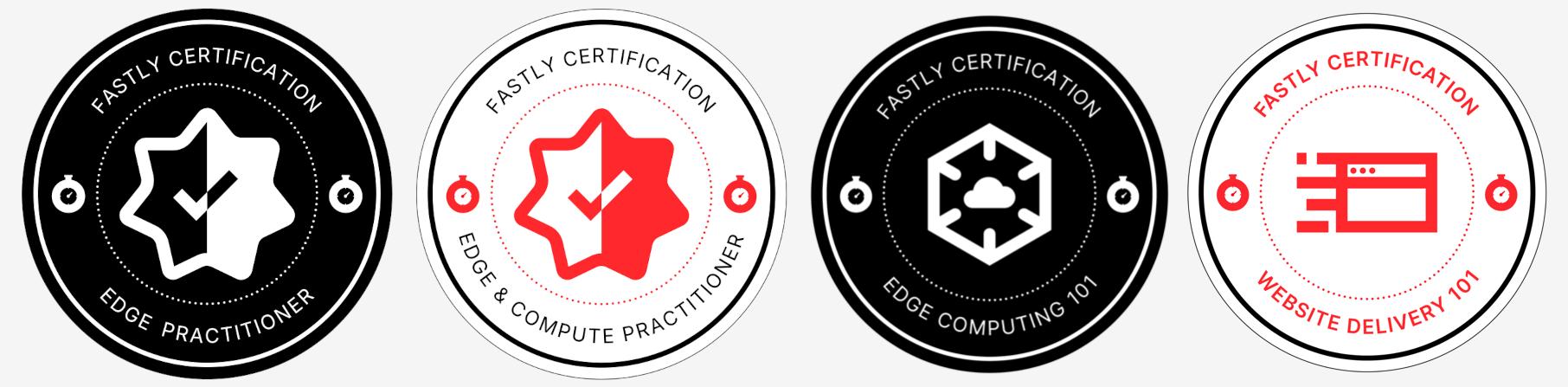
I developed company-first certification programs at both Postman and Fastly – there tends to be an assumption that such a program requires headcount and significant resourcing, I've found that not to be the case. Many companies opt for expensive LMS systems which teach out of context and base achievement measuring on completing quizzes and the like, but with an Open Badges system you can integrate certification directly into user onboarding as learners interact with your technology.
Highlights of my certification work:
Mozilla Open Badges
Working on the Open Badges team at Mozilla, as part of the Webmaker initiative, was an experience that still informs my approach to work today. I was responsible for creating learning material for the new certification standard and tooling. This got me very familiar with the APIs and mental models behind the approach. I went on to build badging programs for several companies and communities.
Used by many industry bodies, Open Badges are digital credentials aimed at creating a more authentic representation of a person’s skills and achievements than traditional qualifications.
Fastly delivery and compute
I implemented a self-hosted certification platform at Fastly – many of the low cost and free options have disappeared as SaaS pricing has shifted, but Open Badges are essentially a set of static files available at a URL, so you can host your own very cheaply (and I can help your teams build the tooling for it).
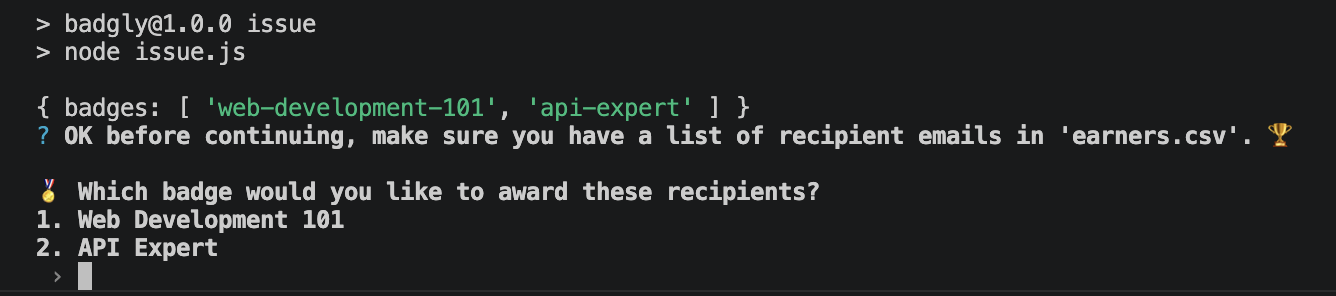
The badging systems I set up for both Postman and Fastly were originally backed by apps running on Glitch. These automated training and verification of skill achievement through self-serve learning experiences. The most recent system I built involves fully static certification hosting with a lightweight issuing flow.
The beauty of adopting the Open Badges standard is that you can integrate your own systems and structures while still benefitting from ecosystem tooling (like recipients being able to share their awards on LinkedIn).
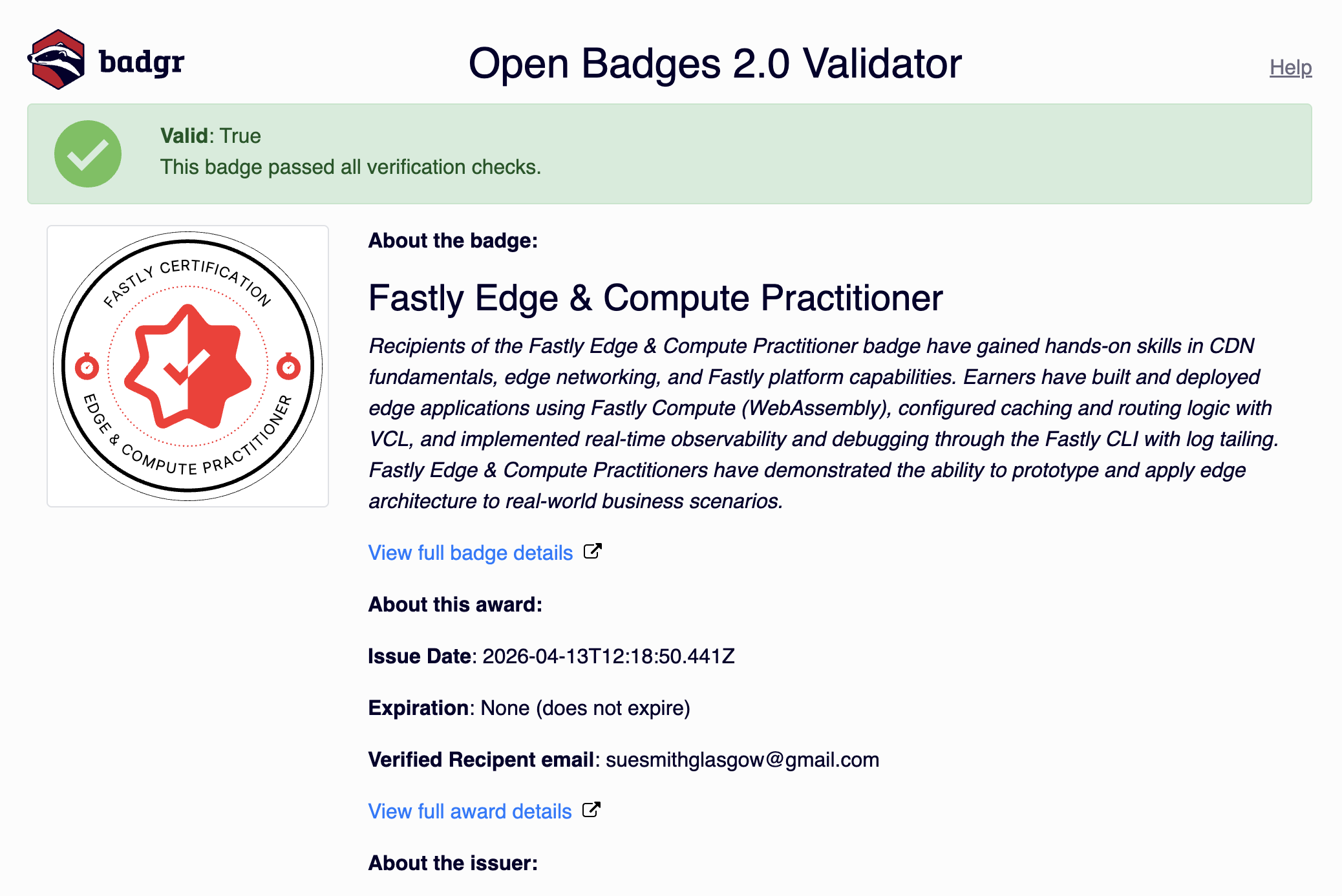
You can also co-author badges with partners or vendors, so they can form part of your ecosystem / integrations strategy. The standard has a pathway for endorsement of partner badges to support this.
My customer and employee training programs have often acted as a test suite for certification systems I was developing. It's always a fun surprise to see how excited people are to share their accomplishments!
Internal and external community at Postman
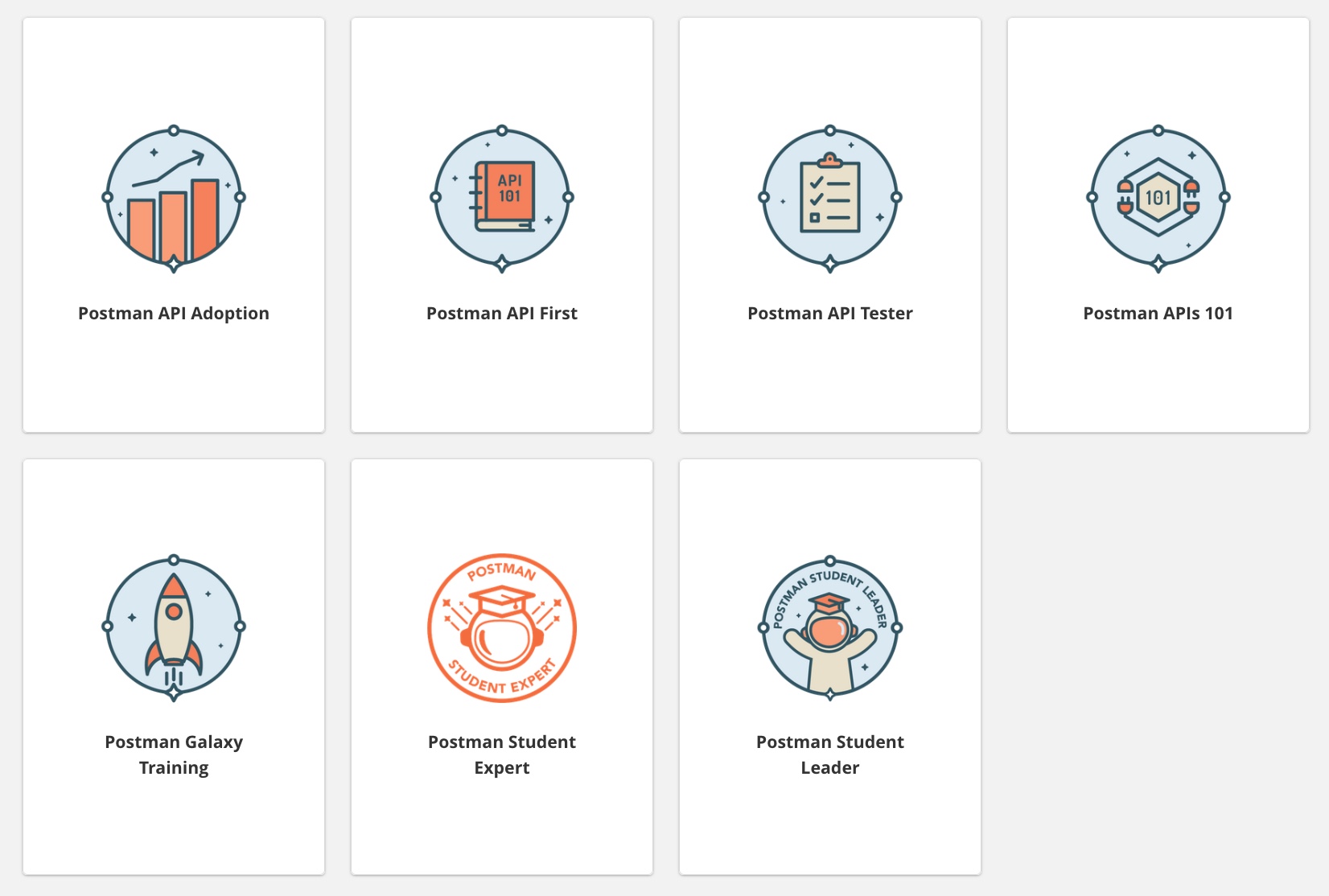
Postman's student program was the first place I used badges as a catalyst for community development. My certification was also incorporated into company onboarding for technical support and customer success teams. Some of my subsequent certification programs have been utilised in managing recruitment pipelines.
If you're a developer product company, a certification program can contribute enormously to your branding and marketing efforts. A tip I can share is to teach beyond the bounds of your own product, reaching into the tech space you operate in – it's a great way to assert your ownership and authority within the area.
For example, at Postman we taught "API literacy" rather than Postman skills, and at Fastly we taught "edge computing" rather than focusing on our own products. Enabling people to be successful in their careers through your training and certification programs generates a ton of developer goodwill.
After working at Mozilla on the Hive Learning Network, I co-founded Hack Aye in Scotland to help young people leverage open source technologies for creative and community projects. We also awarded badges for participation in collective projects.