


Learning content and strategy
Content is the foundation of developer enablement. That goes double for agent coding workflows.
I've managed a number of documentation teams for SaaS companies over the years, leading docs at Postman, the Mozilla Open Badges initiative, low-code mobile development platform Dropsource, and various other open source / developer products. At Fastly I acted in an advisory role for the docs team as part of product experience.
At almost every tech company I've joined, multiple teams were creating content covering the same topics. My top piece of advice for developer education in company settings is to break these silos down and get your teams sharing their work. A given piece of content is likely useful to one or more additional audiences who never see it.
Like most learning work, using education content effectively is typically a culture change task. I've built cross-functional collaborations between teams working on content, influencing companies to capture a wider range of contributions and syndicate output to multiple audiences.
Highlights of my content work:
Workflows that work
When I joined Postman, there was no editorial process for documentation, and no dedicated team. I built a workflow aimed at bringing consistency and quality to the output, while preserving a lightweight, fast-moving publication cadence. During my time there the learning center pageviews multiplied into the millions per month, and we slashed bounce / exit rates several times over.
I worked with Postman engineering and product management to incorporate documentation into the release flow, so that we had fully up to date docs content on release for the first time in the company's history.
Maximising impact
At Fastly I worked within Product Experience, leading a Learning Experience function that operated alongside our docs team. I influenced the docs process to be more open and collaborative, and to support a wider audience of users. The content was heavily optimised for enterprise customers, so I authored and advocated for material aimed at developers in community and smaller company contexts.
Developing a shared curriculum for teaching the platform, I brought additional instructional styles to the docs, with resources in multimedia and interactive formats, extending the docs site implementation to include them.
Syndicating content across target audiences generates more impact from your investment in creating material, and provides opportunities to share learning between functions. At both Fastly and Postman I worked with product, marketing, sales enablement, and customer success to leverage the same foundation of resources for outreach to several different cohorts.
I've found repeatedly that technical product companies don't maximise on the teaching abilities of their teams. Enabling people from engineering and other backgrounds to author content you publish through whichever channels you have available to you is not only a great way to fill your content pipeline, it's excellent marketing for any product aimed at a developer user.
One of my most impactful contributions at Fastly was taking part in a company-wide effort to unify teams around our technical content site. This was an often challenging culture change process, but we ended up forging stronger collaborations between teams than I'd even hoped. I've led and supported this type of initiative a few times over the years, it's the kind of problem I love using communication skills to help solve.
Teaching in context
Developer enablement is most effective in context. This is what I loved about the teaching approach at Glitch – instead of creating written content devs would read outside an IDE, we focused on interactive learning projects exposing instructional guidance inside the editing environment. I've enjoyed teaching technical writers that their content can have so much more impact if they deploy it in dev environments too.
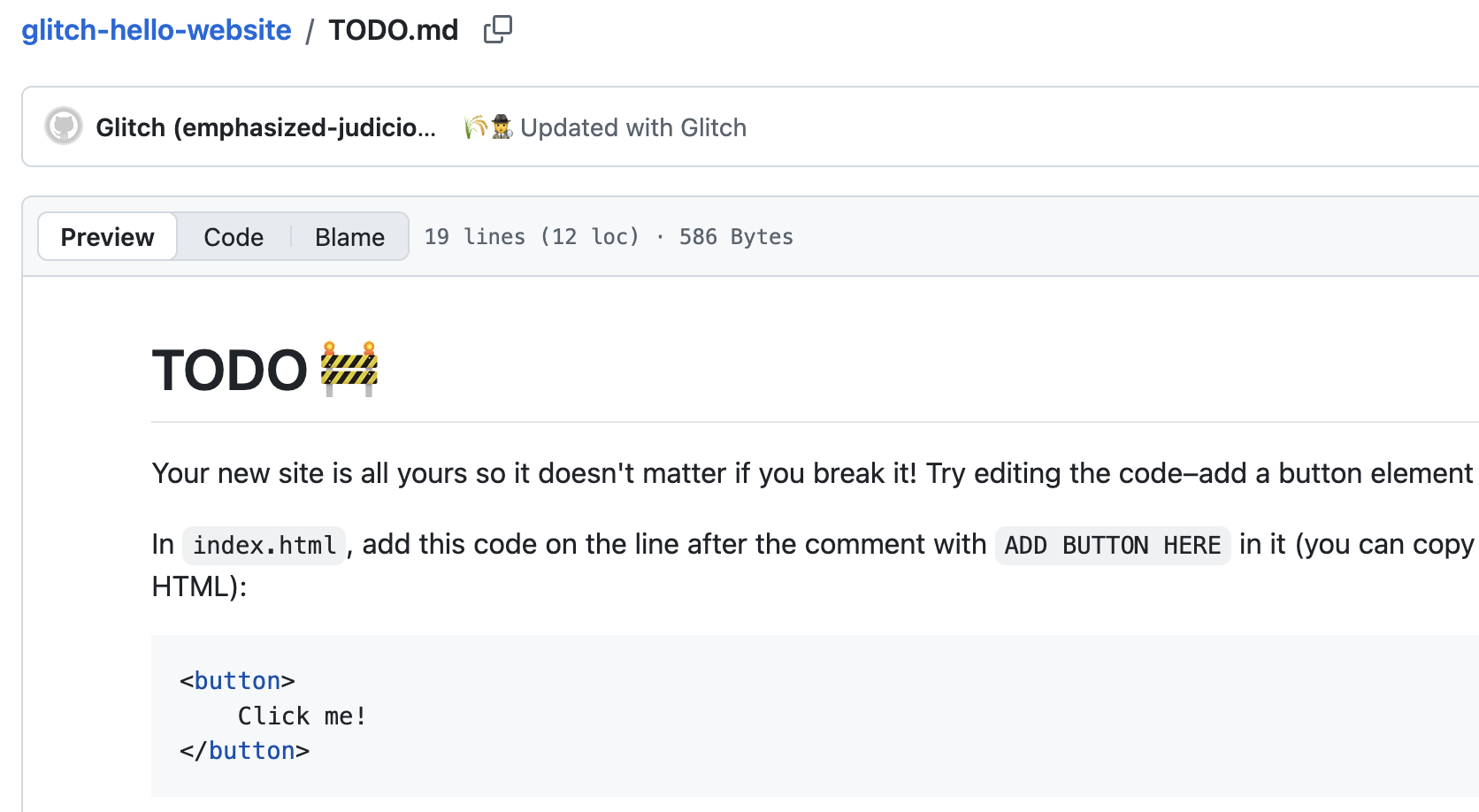
When you focus your education material on experiences developers engage with in IDEs, you can also use them as the foundation of other activities. I've often taken this approach for training, using the feedback loop from live workshops to iterate on the content I'd also make available self-serve.
Looking beyond the tech
📖 Abstractions: No, not like that – October 2023
Effective technical education looks beyond specific technologies and reaches into cultural and social topics, putting the tech in its human context.
📖 You should have your own domain – December 2023
Helping people to acquire technology skills means varying abstraction levels, introducing new mental models alongside practical hands-on interaction.
📖 An easy intro to edge computing – July 2024
During the era of DevRel, I influenced peers to engage more productively with business dynamics.
📖 Learning as engagement infrastructure – March 2021
My own writing
I've written many hundreds of articles over the years, and made a fair few videos. Back when I first started in tech, I made extra cash by writing tutorials on the technologies I was learning for my freelance web and mobile development work. I'd learn how to code something, then write material teaching others to code it too.
🙈 Don't tell anyone, but when I was skint I used to top up my income with content farm work. It was miserable and incredibly low paid, but it definitely honed my ability to produce decent quality writing on a short timeframe. I guess that's a job that doesn't exist anymore lol.
My undergraduate degree (30 years ago 😱) was in English, and I spent several years managing an arts venue for which I wrote programs and press releases etc, so writing has been part of my job for a long time.
More recently I've been making sense of my own thoughts about AI over on my blog.